2026.07.09
Can Organic Molecules Survive a Supernova Explosion? —First Detection of Hot Cores in a Supernova Remnant—
(This article is based on the research news from Niigata University on July 9th, 2026.)
In extremely cold molecular clouds (below −260°C), chemical reactions are thought to occur on the surfaces of dust grains, which act as catalysts, producing complex organic molecules in the form of ice. When a star is born and heats its surrounding material, these icy molecules sublimate into gas. Radio observations have revealed such organic molecules in “hot cores”—warm, dense clumps of molecular gas that surround and nurture newborn stars. The material from which the Solar System formed is also known to have contained a variety of organic molecules that may have served as precursors to biologically relevant compounds.
Meanwhile, analyses of radioactive isotopes suggest that the Solar System may have formed in a region influenced by supernova explosions. A supernova occurs when a star more than about ten times the mass of the Sun reaches the end of its life. As one of the most energetic phenomena in the Universe, a supernova profoundly affects its surroundings by producing elements heavier than iron, accelerating cosmic rays (high-energy particles), and potentially triggering subsequent star formation. In star and planetary systems forming in such environments, energetic particles and powerful shock waves may either destroy organic molecules or stimulate the formation of new ones. However, no hot core had previously been found in a region that experienced a recent supernova, leaving its impact largely unknown.
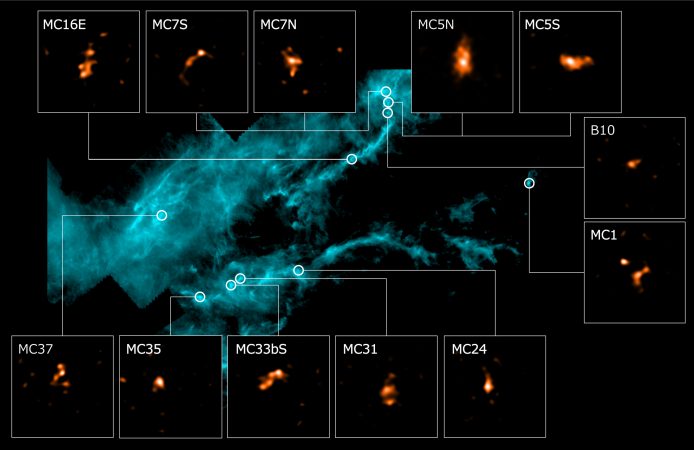
The team, led by Professor Takashi Shimonishi of Niigata University, observed the supernova remnant RX J1713.7−3946 in search of hot cores affected by a supernova. The explosion that created this supernova remnant was recorded in Chinese historical documents about 1,600 years ago. It presents an exceptionally harsh environment, characterized by intense cosmic rays, strong X-ray and gamma-ray emission, and shock waves traveling at thousands of kilometers per second — such conditions are not found in nearby star-forming regions around the Solar System.
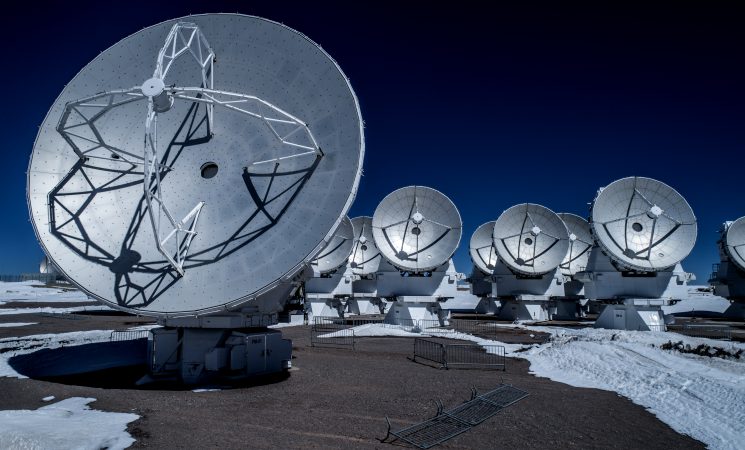
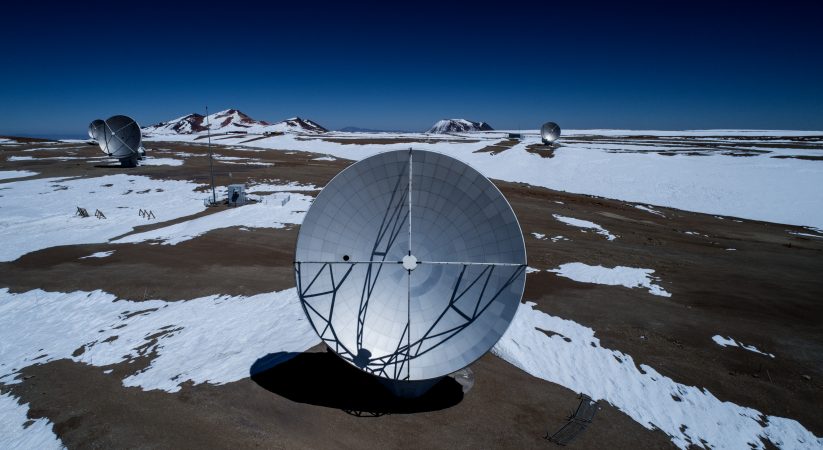
Thanks to ALMA’s extremely high angular resolution of about 0.5 arcseconds, the researchers discovered for the first time two hot cores harboring protostars within a supernova remnant. Both objects were found to contain a variety of organic molecules. Detailed analysis of one of the hot cores revealed that the abundance of complex organic molecules is comparable to that found in hot cores in more typical star-forming environments. This result suggests that the molecules have not undergone significant destruction, even in the aftermath of a supernova explosion. The findings indicate that organic molecules may survive across a wider range of environments than previously thought, preserving chemical complexity even under extreme conditions.
Several possible factors that may have protected these stellar cradles from the effects of the supernova have been discussed. One possibility is that insufficient time has passed since the hot cores were first exposed to the supernova environment, meaning molecular destruction has not yet progressed significantly. Another is that strong magnetic fields generated by the supernova shock wave inhibit the penetration of cosmic rays into the molecular clouds.
Whether these findings represent a universal picture of how supernovae influence the raw materials of stars and planets remains unclear. Future large-scale observations of molecular gas with radio telescopes, together with observations of dust and ice using infrared telescopes, are expected to reveal the physical and chemical properties of stellar cradles and protoplanetary disks affected by supernovae in much greater detail. Such studies may provide unprecedented insights into whether the environment in which the Solar System formed was typical or unique.

Figure 1: Artist’s impression of hot cores —warm cradles of molecular gas surrounding a newborn star—discovered within a supernova remnant. Blue represents high-energy particles and photons produced by the supernova explosion, while brown indicates the surrounding interstellar medium. (Credit: Takashi Shimonishi (Niigata University), based on observation results, with illustration support from generative A
This research was published in a paper titled “Survival of Molecular Complexity under Recent Supernova Feedback: Detection of Hot Cores in RX J1713.7-3946” by Shimonishi et al., published in The Astrophysical Journal on date Month 2026.
DOI: 10.3847/1538-4357/ae6fba
This work was supported by JSPS KAKENHI grant Nos. 20H05845, 24H00246, 25K07364, 25K07367, and 26K00761, the Uchida Energy Science Promotion Foundation, and the NAOJ ALMA Joint Scientific Research Program (2024-27B).
The Atacama Large Millimeter/submillimeter Array (ALMA), an international astronomy facility, is a partnership of the European Organization for Astronomical Research in the Southern Hemisphere (ESO), the U.S. National Science Foundation (NSF) and the National Institutes of Natural Sciences (NINS) of Japan in cooperation with the Republic of Chile. ALMA is funded by ESO on behalf of its Member States, by NSF in cooperation with the National Research Council of Canada (NRC) and the National Science and Technology Council (NSTC) in Taiwan and by NINS in cooperation with the Academia Sinica (AS) in Taiwan and the Korea Astronomy and Space Science Institute (KASI).
ALMA construction and operations are led by ESO on behalf of its Member States; by the National Radio Astronomy Observatory (NRAO), managed by Associated Universities, Inc. (AUI), on behalf of North America; and by the National Astronomical Observatory of Japan (NAOJ) on behalf of East Asia. The Joint ALMA Observatory (JAO) provides the unified leadership and management of the construction, commissioning, and operation of ALMA.